Friday, September 25, 2009

Racing Plain 100M+ in 2009

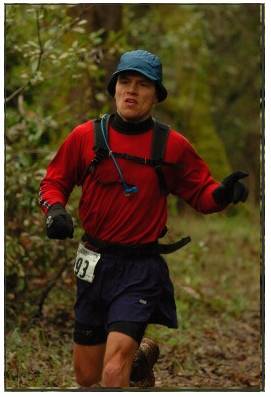
Last week I had the pleasure to meet up with a group of ultra runners for the 2009 Plain "100M" race. I met with Beat J at the airport and we drove for a couple of hours to arrive at the race central at the Thousand Trails Lodge in Plain, WA.

Plain is a back-to-basics race, and quite a contrast to WS100 I did earlier this summer. There are no medical checks, no television crews, no long lines, no crowds, and just a small team of crew members. However, the race has tremendous charm, with home-cooked pre-race dinner, a family-style race briefing, and a warm relaxing atmosphere. The nearby Search-and-Rescue (SAR) team takes care of runner safety and handles timing.

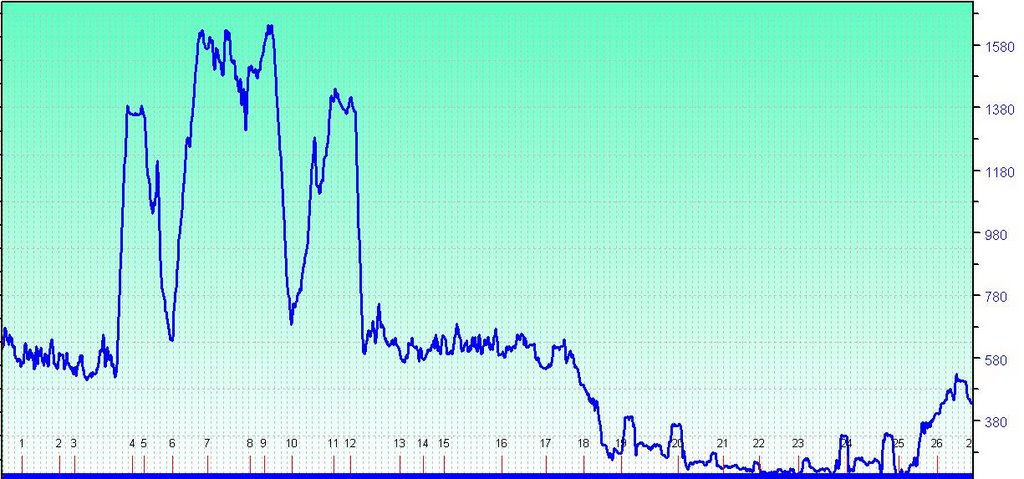
Plain is not a "beginners" 100M race (if such a thing even exists). This race has no trail markings, no pacers, and only 1 aid station (at 55 miles); and as a bonus adds an extra 5+ miles beyond the formal 100M course thus coming in at approx 105M total. The course itself is demanding, if not brutal, in several aspects - crossing over 3 peaks at 6000-7000ft, and several sections of rough and exceedingly steep trails - for total of more than 21,000 feet of climb and same coming down. Competitors that choose to run at Plain need to be confident to handle a wide variety of trail conditions, besides carrying all food and essentials needed during the race. Water can be found in streams, and as I personally found out - requires "active" planning to ensure sufficient hydration at all time.

On race morning start was at 5AM, and the field sprinted off in the darkness. I joined up with Michael Popov at the front of the field, and together we chased a single runner up in front. We passed Deep Creek at furious pace after just 14 minutes, and turned up the hill towards the Maverick Saddle. Here the road climbs steadily, and we kept a solid pace at the front of the pack. After checking the map we found the correct turn to the left on a smaller rough gravel road. I reached the SAR check point after 1:19 hrs, and Michael joined me a couple minutes after. Together, we rounded the hill and turned off to a small road leading down/left. After a few minutes this connects to the Mad Lake Trail single track. We continued running at good speed, and could not hear or see anyone following us anymore. After approx 10 minutes we came to a trail crossing, where the course turns sharp left up a faint almost overgrown trail. The trail is steep, and even walking is tough at some sections. The climb continues for 20 or so minutes, and then leads to rolling trail along the ridge line. This is a very runnable section, but the trail is cut out by water and motorcycle tracks in a few places and I had to jump around to avoid the largest gaps.

I stopped to refill my water bottles, and Michael caught up with me and did the same. As we fixed our gear, 2 other runners passed by. We continued a steady climb and up to and across several very pretty lakes and alpine meadows. This section was very cold in the morning and I wished I had brought some thin gloves (especially when running with 2 hand bottles filled with ice cold water).


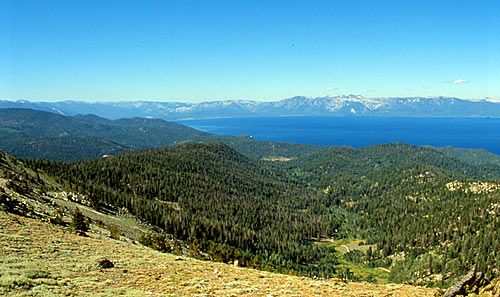
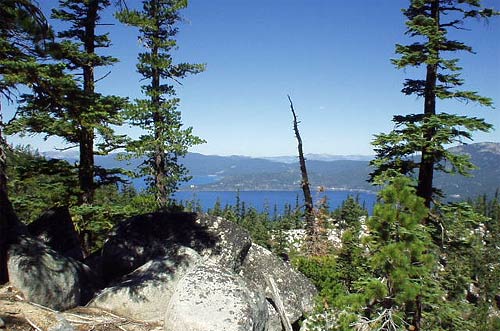
The trail eventually comes to a trail crossing to North Tommy Trail, where it is important to turn right to get up to Klone Pk. This is really the only place on the first lap where it is possible to pick the wrong trail. A small trail then leads up to the top of Klone Pk - the views are amazing.

I was at the top (at approx 6600 ft) at 9.12 AM in the morning. I had another granola bar, and put on my ipod. the run down from Klone Pk to the next SAR check point is mostly a nice soft downhill, including a section of almost zig-zags. This is a great section to keep up a nice pace, and I passed a couple of runners who were going slower. The trail empties out to a gravel road, passes the SAR check point, and leads to an asphalt road. Running on the asphalt road was tedious, and by now the heat was increasing so I tried to stay in the shade where possible. This is also a very runnable downhill section - just very boring. After approx 20-30 minutes the road leads to a turnout area, with a trail leading down left towards the creek. This section is narrow, downhill, runnable but dusty and somewhat technical. At the bottom of the hill (at approx 2050 ft) I met the race directors Chris and Tom who where picnicking and watching the runners come by. I turned right the trail leading up the hill, and crossed the bridge over Tommy Creek after a few minutes.

During the race pre-briefing they had informed us that the next 14 or so miles had no water, and I had brought a couple extra water bottles (besides my hand bottles) for this reason. However, I had misread the map, believing that there was another creek further up the hill - and therefore I only filled my hand bottles, so to try avoid carry unnecessary weight up the hill. The hill is brutally steep and goes on for ever. After climbing for an hour, my water now was gone - and I realized that there would be no more creek higher up. I thought for a moment about returning back down to fill up water, but quickly decided this would be a bad idea. I kept hoping there must be SOME place to find water higher up. The climb continued upwards, and after 2 hours I could see Signal Peak high up in the sky. As I continued the climb up to the peak I now had been running 1.5 hrs without any water and really started to feel weaker. The trail passes several smaller false summits, and the last part up to the highest point (at approx 6500 ft) is extremely exposed to sun since all vegetation is gone due to some forest fire in previous years. Finally the trail turns downwards, and passes through some more tree covered sections. I went off the trail to look for some possible water sources - but all was bone dry, so I decided to just keep going - knowing that I would have at least 7 miles remaining to the next known water source. I had never run so long without any water in any race or in training - so I was wondering what the effects would be for the race overall, and even if I would ultimately would get water - how long it would take for my body to recover from the added stress during these dry 2-3 hours. At one point the trail rounded a small greenish meadow - and I realized this may be a unexpected opportunity to find some water. There was no clear running water to be seen, but I jumped out in the high grass and walked out into the middle of the meadow to find a very small stream. I filled every water bottle I had and also drank over a liter of water right on the spot. Life was back, I took some salt tablets, and some food - and got back on the trail and was able to pick up the speed running at nice speed. I passed by the SAR check point, and dropped off 10 hours worth of empty GU packages and CLIP-2 bags.

The section leading down to the river crossing is very demanding, it is steep down hill, and has much loose rocks, and is also overgrown with weeds and bushes. But it is worth the price - as the water in the stream is superb and refreshing. I again filled up all bottles, and continued onwards on a rolling climbing trail up to Maverick Saddle. This section of the trail is amazingly pretty - with dense vegetation, and many magical small waterfalls along the narrow creek canyon. I finally reached the top of the trail, and after checking the the map I came out back at Maverick Saddle. I felt surprisingly good, and was relieved to have completed much of the first lap of the course. I knew the next 4 or so miles were mostly downhill on a relatively easy mountain gravel road. I ran all the way down to Deep Creek to complete the first lap at approx 13.5 hrs. I had hoped to come in below 14 hrs so I felt all was per plan so far. The volunteers informed me I was in 4th place - which felt great.

The volunteers at Deep Creek did an amazing job and were super helpful. I changed clothes and shoes, swapped to my night backpack, and was served some nice hot pasta.
In 5-10 minutes I was off on the trail towards Alder Creek. I found this section of the trail quite tedious, I was able to run large parts of it, but there are never ending small hills that break up your rhythm and the trail zig-zags in and out of the woods in the a convoluted way. I passed Alder Creek after a couple of hours, and as the evening was coming I took out my headlamp and continued onwards in a mix of running/shuffling/walking.

After another hour the trail narrows and climbs steadily up along Chikamin Tie Trail. The trail is very steep in some sections (although not as sustained as up to Signal Peak). It was now pitch dark, and I had not seen another person for almost 4 hours. I felt OK physically, but sensed I was getting in somewhat of a zombie mode mentally as I continued grinding up the hill. An hour later, as I was refilling my water bottles, I met a skunk(!) blocking the trail. The skunk clearly had no intention to move, and I certainly did not want to get "skunked" - so I hurled a few pine cones and twigs at him, and he ultimately decided to disappear out into the dark woods. As I kept running on, I was passed by another runner. I figured that 5th place was still fine, and I should just keep up the forward speed, A little further on he stopped to fill his bottles, and I passed him. Another hour later the trail turns up to the right (this is one of the few places where it is possible to miss a turn on the second lap). This led to a longer than expected sustained climb up to the next SAR check point. At first I could see some headlamps following me in the dark, but they faded away and I did not see any other runner for the next couple of hours.

The section of the trail that climbs up to the top of the peak (at approx 6300 ft) and then comes around the Pond Meadows was extremely tedious. The trail is just a single narrow motorcycle tire width which makes running difficult and painful for the feet. As I came down past the meadows I was passed by another runner. It was late at night and it now was getting chilly. I stopped at Mad Lake and put on my windbreaker, only to have to take it off 15 minutes later when as I started the climb up Alder Trail. From the pre-briefing I did not realize this was a climb - I had assumed it was all downhill from Mad Lake...

At the crest of Alder Trail my headlamps started to get dim, it was still another hour until proper daylight - so I ran in semi darkness for a while. Then follows a steep endless zig-zag downhill. I ran most of this section, but it was mentally demanding as it felt it would never end. Finally, the trail spit me out on a gravel road, and after a short section of single track there is a couple of miles on a wide gravel road leading down to Alder Creek trail crossing. As I came down to the main trail intersection I passed the same runner I had met a few hours earlier up at Mad Lake during the night. As I stopped to fill up water, he continued on and sprinted away out of sight.

Now having done all the hard parts of the course, I was considering how fast I should run the final 7 miles. I felt it would be great to go under 29 hrs, and thus picked up a decent pace of walking uphills and running the flat and downs. After the next 3 or so miles, I realized 29 hours was safe, and I decided to get as close as possible to 28 hrs. I passed Deep Creek at 28.02 hrs, and then just had the 1.7 miles left to the Finish. A volunteer at Deep Creek told me I was in 4th place. This information made me realize that I had a chance to make a solid result at this race. I immediately started to worry someone would come and pass me in the last 15 minutes of the race - so I ran the whole section as fast as was possible, stopping at each turn to check that no one was coming after me... (Later I found that the next closest competitor was more than an hour back, but the stress definitely helped me sprint the last part of the race).

Crossing the finish line in approx 28.20 was wonderful and met my goal of finishing in between 28 and 30 hrs.

In summary, Plan is a superb challenge and an excellent race for those that enjoy a more back-to-basics adventure-like race.

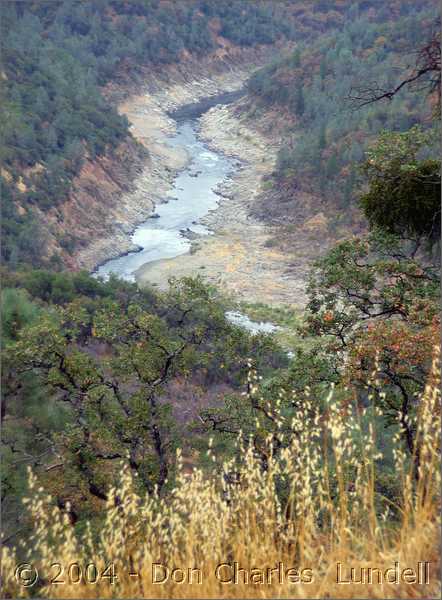
Note: Pictures in this blog are reused from Glenn Tachiyama's great write up of his training runs for both lap 1 and lap 2.


My official time at SAR check points

Maverick 1:19:05
Tommy 5:41:00
Tyee 10:14:10
Maverick 12:35:34
Deep Creek 13:14:45
Chickamin Tie 19:53:00
Alder Cr. 27:18:00
Finish 28:21:02

Summary of Trail conditions (scroll down to see the information!)


SectionDistanceGradeWidthTrail
WaterOther
Start - Deep Creek1.7Gentle
Wide
Road
NoDark
Deep Creek - Maverick Saddle7.0Steady up
Wide
RoadNoDark
Maverick Saddle to Hi-Yu Trail

Rolling
Single track
Trail
Yes
Hi-Yu Trail

Steep up
Narrow
TrailNoOvergrown
Ridge Line past Lost Lake
11.7
RollingSingle trackTrailSome
Meadows at Blue Creek Trail

Steady up
Single trackTrailSomeVery cold
North Tommy Trail to Klone Pk
20
Steady up
Single trackTrailNo
Klone Pk - SAR (FSR 5605)
26.6
Rolling/down
Single trackTrailNo!
SAR down on road

Down
WideRoad
No
South Tommy Trail down to Creek
30
Steep downSingle trackTrailYesDusty
Over Bridge and half-way up the hill

Steep up
Single trackTrailNoVery steep
Halfway up to Signal Pk
36.6
Steady up
Single trackTrailNo!
Signal Pk to SAR
Rolling/downSingle trackTrailNo!!
SAR to Cougar Creek44.3
Rolling/downNarrow
Rocky!FinallyBrutal Overgrown
Cougar Creek to Maverick Saddle49
Rolling/upSingle trackTrailYes
Maverick Saddle to Deep Creek55
Steady down
Wide
Road
NoGravel road
Deep Creek to Alder Ridge Trl62
RollingSingle trackTrailNo
Alder Ridge Trl to Chikamin Tie Trail
65
Rolling/upSingle trackTrailYesDarkness coming
Chikamin Tie Trail to SAR74
Steady upSingle trackTrailPlenty
SAR to Pond Camp Trail
80
Steady upSingle trackTrailYesRocky sections
Pond Camp Trail to Pond Meadow84
Rolling/upNarrowTrailNoTedious
Pond Meadow to Alder Ridge Trl
87
Flat/upSingle trackTrailYesChilly
Alder Ridge Trail down zig zag
Steep downSingle trackTrailSomeTechnical
Road all down Alder Ridge Trail
97
Flat/downWide
Road
NoGravel road
Alder Ridge Trail to Deep Creek103.3RollingSingle trackTrailNo
Deep Creek to Finish105Flat/downWide
Road
NoGravel road

Tuesday, July 07, 2009

Western States 100 in 2009

Like many other runners my journey to run Western States 100 has been a long one, dating back several years. In fact, it started already in 2005 as I was getting into ultra running after many years of doing triathlons, trail runs, and mountain biking. That year, since I had no chance to run the WS100 race, I instead opted to run the course without support from Squaw to Michigan Bluff. Needless to say, I was immediately hooked, loved the course, the mountain views, and the highland trails.

The following years, I was in the lottery for both 2006 and 2007 - but was not selected. Those years I instead choose to help as as safety patrol runner from Squaw to Robinson Flat. Each year I actually drove to Robinson Hill the day before the race start, and ran the course backwards to to Squaw, and then ran back to the car as part of the Safety patrol team. It was a nice experience, and it certainly helped me get to know the first 30 miles of the course in great detail.

The following year, 2008 the race was canceled, and I was only able to do a shortish training run to Red Star and back.

So, in 2009 it finally was time for the real deal. However, the situation was not optimal from a training perspective, since I had been struggling with a foot stress fracture for much of the spring, and in fact the only 2 times I had run more than a couple of hours was at a race in March and another race at end of April. Therefore, I did not really know what to expect in terms of form, and whether my foot would hold together for the whole distance.

I traveled up with my family to stay at a house nearby Squaw for a couple of days leading up to the race start. At the morning of the race all went per plan, and by 5 am we were off. The start was actually a bit of a surprise, since in previous years I had been with the Safety Patrol waiting high up the mountain when the gun went off. This time it was great to be part of the crowd, and I enjoyed the cheers from the spectators as all racers headed up the mountain. The run/walk up to the top went without any issues - I stayed close to a group of other ultra runners from the bay area. I was a careful to not go out too fast, but I felt good - and I crested Escarpment in around 50th place, and I was approx 5-10 minutes ahead of my target 24 hour pace.

The run down from Escarpment to Lyon Ridge and then Red Star was nice running, but a little odd as I met surprisingly few other runners. In fact, for much of the Granite Chief section I did not meet a single person for more than 30 minutes. I came into Red Star almost 30 min ahead of 24hr pace, and kept telling myself to go easy in the beginning. I added a little extra tape on my left foot where I felt some friction developing. The part to Duncan Canyon was also fast, but incredibly dusty. I ran behind another runner for much of the last 2 miles, and it felt as running in a sand storm, luckily the gaiters worked and had no issues other than breathing a lot of dry dust for some time. Previous years I have always struggled a bit with the section from Duncan to Robinson Flat, however this year I was able to run the vast majority of it at a decent pace. The swim at the bottom of the canyon is superb - and it gives a boost to get up the hill. I arrived into Robinson Flat 45min ahead of planned pace. The crowds were amazing. I cooled off with some ice water and continued quickly out up the short hill to Mt Baldy.


I had never run this section of the race before so I did not know what to expect. It is safe to say that this now is one of my absolute favorite parts of the run, in terms of the gorgeous views and the nice downhill trail coming down from the top of Mt Baldy. The section to Miller's Defeat was longer than I had expected and the last section was tedious and the temperature was now climbing quickly. The last miles seemed it took for ever until I got to the aid station. The volunteers were very helpful as always. At this point I was running without a shirt to keep cool, and one volunteer helped add a layer of sunblock on my back. This was a lifesaver for the rest of the sunny day, but I felt bad for the guy who had to do it - considering how sweaty I was at this point :-)

The next section was very runnable, with only distraction was a herd of cows (or was it bulls?) in the middle of the trail. I played it safe and walked around it at a little distance and then continued down the trail. I came down to Dusty Corners aid station at 38 miles just after noon, approx an hour ahead of 24 hr pace, and in about 45th place. I felt good about the day, but also knew well that the bulk of the run was still ahead of me. The section to Last Chance was also new to me, since when I ran it previously I had opted to take the gravel road instead of the trail. I was surprised by the amount of downhill on this section, and I kept up a decent pace, but choose to walk some of the steeper uphills to save effort. Much of this part is shaded so the heat did not really bother me much. By Last Chance aid at 43.4 miles I had lost a little of my time buffer down to 45 minutes. It did not worry me too much, as I was hoping to pick some of this back on the 2 big climbs coming up. The run down to the creek was uneventful, and I started the power walk up to Devil's Thumb, and arrived at 2.30, and was glad to see I had picked up 15 more time. The climb was steep and tedious as usual - but I was mentally very prepared for it so it went by quite quickly. I had picked up an extra large water bottle at Robinson Flat, and for all the following sections I had it filled up with just ice. This worked wonders on all the climbs as I was able to refill by hand bottles half way up the climb with half melted ice water and also use for cooling over my head. The next climb at Michigan Bluff went in a similar way, and I arrived up at the top at 4.30 pm, now in 52nd place. I felt quite good, warm yes - but definitely not over heated.

The following section was surprisingly tedious, I walked parts of it and running on the wide gravel road was just not as fun compared to the beautiful trails I had been on for the last 12 hours or so. In addition, the descent down to Bath Road was a bit of a surprise, I had not checked this section in detail on the map, and had expected a relatively steady run up to Foresthill. Instead, there now was yet another canyon to battle with and it drained some mental energy.
I passed the aid station and continued the long walk up the road to Foresthill. I mixed running and walking, and came in to Foresthill aid at 6 pm after running 13 hours, an hour ahead of my 24hr target time. I was starting to feel more optimistic about the race. I tried hard to not get my hopes up too high about finishing under 24hrs, but felt there may be a chance if I kept up a steady pace. At Foresthill I changed shirt, shoes, ipod, and got out the headlamp.

I knew the next section well, as I had done a run there in the previous year. The steady downhill was nice and I kept a steady pace. However, as I got close to the Cal 1 aid station I stopped to pee and noticed a distinct red color, not good I realized... The condition is referred to as hematuria. I had never experienced this in any previous ultra so could not tell if/how bad this may be. I asked a few other competitors what they thought - and the typical answer was "not good"... so at this point I decided to play it safe and I shifted down the pace and walked much of the way to Cal2 and Cal3 aid stations. BTW - since the race I have read more about this condition and found that it necessarily must not be a critical issue, and can happen quite often at strenuous exercise.

I continued peeing red for the next few hours. I felt no other pain or tightness, however mentally I got quite worried, and even wondered if this would force me to stop the race. When I finally arrived to the river crossing, at mile 78 just after 10 pm in 64th place, I asked a nurse what options I had. She asked a few questions, and we agreed I would go slow, and monitor the situation, keep up the fluids, and then reassess at next aid.

The river crossing was really fun, and the water level much deeper than I had expected. Over on the other side I changed into a dry pair of shoes and set off up the long hill. This is another example of a bit poor review of the course, as I had expected (hoped for) a steep but relatively short uphill. However, the climb up to Green Gate, at 80 miles, was far longer than expected. I arrived up at at around 11 PM. Still ahead of a 24hr pace, but I had lost much of the buffer by now.

The next section went really slow, and I ended up walking majority of this. My feet were tender from blisters, and I was feeling out of energy. The darkness was solid and I power walked most of these sections without seeing much other runners. On the positive side, pee was now good again and I felt less concerned about DNF due to that situation. After what seemed like forever, I arrived into Auburn Lake trails. I had decided that my feet needed some serious attention - so I sat down and got help by the medical team at this aid (manned by Bay Area Mountain Rescue team). They gave excellent service, and I had several cups of hot soup. However, the foot service took a long time, and I left the aid station at around 2am. I was now behind my time goal, and had mentally decided to stop worrying about 24 hrs, but instead keep up a steady power walk into goal, and try run as much of the downhills as possible.

Brown's bar aid station was marvelous, one could hear their music from far away around the mountain, and the lighting was energizing. I had some more soup, and I left the aid station at 3.13 am. I was surprised by the deep descent into the next section, and then just as surprised about the very serious climb up to Hwy49 crossing aid station. I spoke with a doctor about my earlier troubles, and she confirmed it was OK to keep going, but to monitor the situation during and then after the race. I left the aid station at around 4.30 just as the first rays of morning sun could been seen at the horizon. I power walked the next section, and ran some of the downhills and arrived to No Hands in good spirits as I was certain I would finish my first WS100 run.

I continued the power walk up the climb to Robie Point, and then up along the streets down to the High school. As I got closer I got into a run, and I entered the track in nice pace. The half lap around the track was very emotional, and I finally realized that I had done this race - after 4 long years of planning and trying.

I completed the race in 25.47, not the sub-24 I had hoped for, but still very satisfying. I learned a lot about the course and how to plan out the race for a faster time - next time. Western States clearly is a unique race compared with many other ultras - more racers, bigger crowds, professional service, superb logistics and race organization, and more. However, at its core it is still the individual athlete that has to dig deep both physically and mentally to complete the race - and which is what makes running ultras such an all around satisfying experience.

Friday, October 31, 2008

Pomegranate Juice


This weekend I joined about 125 other runners in the San Francisco One Day 12/24 hr ultra run. The race is based on a 1.06 mile loop on the beach at Crissy Fields in San Francisco. I had signed up for the 24 hour option, but did not really know what to expect as this was my first time running this type of time-based ultra run on looped course. After the initial set up of gear and chair at the transition area - at 9 am the field was off! the course is essentially flat with 50/50 bike trail and gravel walk path. I noticed that even though the absence of hills to climb makes the running less strenuous - it also eliminates any natural walk breaks that one usually gets in a traditional trail ultra in the mountains.


I joined in with the lead group and we completed the first loop in just over 8 minutes. I continued a steady pace and picked up the lead for the first hour, and continued in the lead for the next 25 laps or so. After changing shoes and a short restroom break i dropped down to second place, and then to 4th. It was an enjoyable day with great weather and lots of people out walking and jogging along the beach. After running continuously for 3-4 hours I started taking a brief walk for 10-15 seconds on each lap to keep down the effort a little.

Having the transition area with the aid station every 1 mile makes for a very different race since then you come by an "aid station" every 10-15 minutes. This can make you loose ones rhythm and also complicate fluid and food intake as compared to a regular race where aid station only comes up every hour or so. At the aid station I tried some new fluids, including a new pomegranate juice, more on this later.

I kept up the pace and around 40 miles I started feeling need for more energy and fluids. I had not peed yet during the day which typically is a bad sign that ones fluid balance may be off. So during the next few laps I had some more fluids, only to find that it made me nauseous and I ended up throwing it up. This was alarming, and I had never experienced that in any previous race. I took down the pace a little bit, and tried to get my stomach to settle a bit.

My family came by and had brought some nice pasta to eat, and I walked the next couple of laps with my daughters while eating the food. It felt good initially, but it was clear my stomach was not there yet - and quite soon thereafter all the food I had eaten came back up. I felt ill for the next couple of hours and could not keep any fluids down. Later on I concluded it likely was the pomegranate juice that zapped my internals. The juice is relatively sour and also has some carbonation in it. It was a bad idea to try that on race day.

As the evening grew darker I got out my headlight and continued at a relatively slow pace around the course. I tried resting for 10 minutes to see if that would help, and I walked a few easy laps also. However, it seemed nothing I did really worked, so after a few more hours at around 8 pm I decided that this would be a 12 hour race for me, and not a 24 hour race. I had not had any fluids or nutrition for the last 6 hours, my legs and feet felt fine - but all my energy was gone. I concluded it would be a bad idea to try push on for another 12 hours during the night. So I finished a last 3 or so loops and then stepped off the course at just before 9 pm, still having completed a decent 65.1 miles in under 12 hours. In the process I also improved my PR for running 50K ( , and 50M and 12 hr (65.1 miles)

Even though I had not been able to complete the full race as intended it still was a great learning experience, and confidence boost since I felt great during the first 25 miles where I lead the race, and then contined in top 5 for another 30 miles - even if I actually was walking for the latter part of it.

Lessons learned for doing a looped 12 or 24 hr ultra run:
- have a specific running plan, with intended lap times and milestones, dont go too fast early on
- plan for when to stop at aid stations, for example only once in every 3-4 laps
- plan for when to eat, and take a real stop for 5-10 minutes
- walk some portions of the lap on regular basis to let body recover
- if your digestive system shuts down completely take a LONG rest, e.g., 30-60 minutes, before picking up the pace again

Monday, October 13, 2008

List of Persons - Well Known and Vegetarian

Vegetarian - Writers, Philosophers, Scientists

  • Alan Moore
  • Alan Watts
  • Albert Schweitzer
  • Alice Walker
  • Amanda Feilen
  • Benjamin Spock
  • Berke Breathed
  • Carla Lane
  • Chandrashekar Subrahmanyam
  • Charles Darwin
  • Charlotte Bronte
  • Clive Barker
  • Colin Spencer
  • Ed. Diana
  • Emanuel Swedenborg
  • FerriĆ©re
  • Franz Kafka
  • George Bernard Shaw
  • H.G. Wells
  • Henry David Thoreau
  • Henry Heimlich M.D.
  • Isaac Bashevis Singer
  • Jean Jacques Rousseau
  • Jeremy Bentham
  • John Robbins
  • Krishnamurti Jiddu
  • Leonardo Da Vinci
  • Louisa May Alcott
  • Mark Twain
  • Milton
  • Nikola Tesla
  • Percy Shelley
  • Peter Singer
  • Plato
  • Ralph Waldo Emerson
  • Ruth Rendell
  • Scott Adams
  • Serge Raynaud de la Ferriere
  • Sir C. V. Raman
  • Sir Isaac Newton
  • Socrates
  • Srinivasa Ramanujan
  • Steven Jobs
  • Thomas Edison
  • Tolstoy
  • Upton Sinclair
  • William Blake
  • William Wordsworth
Historical Vegetarians & Advocates of Vegetarianism
  • Annie Besant
  • William Blake
  • General William Booth
  • Fenner Brockway
  • Charlotte Bronte
  • Rupert Brooke
  • Buddha
  • St John Chrysostom
  • Clement of Alexandria
  • Sir Stafford Cripps
  • Leonardo Da Vinci
  • Diogenes
  • Thomas Edison
  • Albert Einstein
  • Ralph Waldo Emmerson (American lecturer, essayist, and poet)
  • Benjamin Franklin
  • Mahatma Gandhi
  • Goldsmith
  • Dr John Harvey Kellog (brother of W K Kellog who founded the Kellog Company) (vegan)
  • Jiddu Krishnamurti (Spiritual teacher) Source: Krishnamurtis Notebook
  • Lamartine
  • Martin Luther
  • Mahavira
  • Eustace Miles
  • Milton
  • Montaigne
  • Barbara Moore
  • Sir Isaac Pitman
  • Origen
  • Ovid
  • Plato
  • Plotinus
  • Plutarch
  • Porphyry
  • Pythagorus
  • Sir C. V. Raman (Nobel prize-winning physicist - 1930s?)
  • Anthony Robbins (Success Motivational Coach) (vegan)
  • Richard St Barbe Baker
  • Henry Salt
  • Schopenhauer
  • Seneca
  • George Bernard Shaw (writer)
  • Shelley
  • Socrates
  • Chandrashekar Subrahmanyam (Nobel prize-winning astrophysicist - 1983)
  • Emanuel Swedenborg (1688-1772)
  • Nikola Tesla
  • Henry David Thoreau
  • Leo Tolstoy
  • Voltaire
  • Dr Barnes Wallis
  • Mary Webb
  • John Wesle

Monday, April 14, 2008

More Mountaineering Quotes...

"The mountains have rules, they are harsh rules, but they are there, and if you keep to them you are safe. A mountain is not like men. A mountain is sincere. The weapons to conquer it exist inside you, inside your soul." - Walter Bonatti

"Pain is only weakness leaving the body." - Tom Muccia

"The summit is just a halfway point." - Ed Viesturs

"The next time you curse the fact that it's Monday, just think of it as proof that you made it through another weekend without killing yourself by doing something stupid." — Phil Garding

Tuesday, January 01, 2008

Great quote from famous health advocate and runner Are Waerland

"...Running acts as a bath in pure oxygen. It opens all the pores of our skin,
ventilates our clothes, stimulates our nerves, brings our capillary muscles into action,
oxygenates our blood, burns up all rubbish in our tissues and leaves us with a good
supply of oxygen in stock for further demands. This extra store of oxygen in the
human system manifests itself physically in a feeling of buoyancy and of almost
boundless energy. Worries disappear like a mist before the morning sun in June.
Difficulties seem to exist only to be overcome. Activity is our joy. Life is glorious ...
whilst oxygen-hunger makes us languid and lazy, we gasp for air and are mentally
irritable, taking a gloomy view of everything!..."

and another one

"What is old age but a gradual, involuntary and voluntary slowing down of all our
bodily activities. If you always walk gently, slowly, respectably, step by step, you will
be an old man at 30. But if you run at 60 and 70 and 80, at least once daily for 10 or
15 minutes, you will never know old age. You will keep young until the very last
moment of your life, and you will smile at death which should come to you then, not
as the result of a devastating pulmonary fire or pneumonia, but in the form Nature
meant it to come, the heart suddenly going to rest with its last beat like a clock when
the spring has run down. When the heart stops, everything on all the canals in the vast
lagoon-city of our body also comes suddenly to a standstill. Every boatman ships his
oars, every vessel hauls down its flag. The great Silence has fallen over the whole
community. The time has arrived for breaking up, for saying 'good bye' and starting
on a new adventure."

Saturday, July 28, 2007

Tahoe Rim Trail 100M - tough!

I ran the same 100M race in 2006, but decided to stop at 77M since I felt so tired. I have since come to understand, by doing other 100M races, that this is something to be expected for a 100M race...So this year I had set mind to finish this race all the way.
I went up to Carson City on Friday, the day before the start to check in and weigh in for the race officials etc. I felt better prepared than the previous year, but still was only able to sleep 4 hours during the night before the race - before getting up at 2 AM to get ready for the start at 5 AM.

Similar to the previous year I headed out at a brisk but calm pace in the beginning, The first 30 minutes are in early dawn and without headlamp it is sometimes hard to see roots and rocks on the trail ahead. But I stayed close to some other runners in the front pack. Instinctively I knew I was running at a too high pace, but it was fun and the running was easy even if we were climbing 1000 feet in the first 4 miles up to Lake Marlette. I ran a few miles with Scott Dunlap. After just over an hour I came up to the first aid station at Hobart, it was 2 minutes faster than last year. I filled up my bottles and continued up the next hill. It was a cool morning with a brisk breeze, in what would turn out to be a cooler day compared with 2006. I was glad I decided to wear a long sleeve jersey.

I climbed up and around the Marlette ridge, and rounded the photographers in their usual spot. I kept a steady pace along the next few ridge lines, until came down to the long zig-zag downhill section leading into Tunnel Creek. My time at Tunnel Creek was still a couple of minutes faster than last year – at just over 2 hours. I filled half bottles and started down Red House trail. The previous night I had been reading about downhill running technique, and this was a perfect place to fine-tune my downhill form. A couple of runners had passed me in the last hour but otherwise I was staying steady in the field, probably at around 6th place, as I was going down the hill. My time to Red house was faster than last year, and I ran all the way up to Tunnel Creek – except for the last steep section in the sand.

I was at around 3.15 into the race and I continued towards Diamond Peak. Last year I ran this section with a small group of runners which helped maintain a nice steady pace, but this year I was on my own. The section up to Diamond peak went quick as usual, but the last section to Mt Rose was felt very long. There are never ending series of seemingly similar twists and turns and it plays games with your mind – thinking that the final turn is just around the next corner. It would be really good to do a few training runs on this part of the course so to better know how to run this lengthy 6+ mile portion. A few runners passed me during these hours and I started to realize I probably had gone out way o fast. I started to have some pain in my knees which surprised me, and I as also feeling a bit tired and had to walk most of the last hill over the wide meadow leading into the Mt Rose aid station. I arrived there about 10 minutes later than the year before, at around 5:00 into the race.


I was doing fine on my hydration, weigh-in showed I had lost only 1 pound in the first 5 hours. I spent a few minutes resting, and had some sandwiches and then returned back down the trail. Now my leg pain was worse and I walked long stretches where it should have been an easy run down the trail. I arrived back to Tunnel Creek at around 7:00 hours. Last year I had felt a little bit of cramping in my thigh muscles at this point and had gotten some help to stretch it out. This year I was OK – except for the continued pain that limited my ability to run continuously. I was still only 10 minutes off my time from 2006. I filled up my bottles and continued the hike up the zig-zag trail to Hobart aid station, I did very little running since it is mostly uphill and I did not have the energy to really get into an effective stride among all the climbing. At Hobart I had a great milkshake (this is the best!). By now the day was starting to get really hot, but I was very

focused on my fluids since I did not want to repeat the problems I had previous year where I had to wait for a bit at Snow Valley due to too much weight loss at that point. The climb up to Snow Valley felt shorter than last year, I was power hiking all the way up and arrived at 9:29 into the race, I was now 15 minutes behind pace from last year. The following section down to the start at Spooner Lake is generally very runnable, but I walked large portions of this arriving to the Start/Finish area at 11:20, approximately 40 minutes later compared with previous year.

However, I did not feel too bad about this, although I had leg pain, since I had felt I had good energy level and was actually looking forward to the second lap and the night portion of the run. The volunteers at Spooner aid station were amazing, 100% service, and super friendly. I
changed shoes, socks, and shorts. I called home to my wife and let her know all was fine and that I was starting the second lap. After eating some more pasta soup I started the long trudge up the Marlette Lake trail. This climb always is so much longer and difficult the second time compared with the first lap. Halfway up to the lake I started to feel a little bit tired and had to pause a few times up the trail and catch my breath for a few moments. I sensed I was not getting enough energy so I had a big bar of chocolate – this tasted great!

As I came closer to the Hobart aid station I felt the energy slowly returning. A few runners passed me when coming down to Tunnel Creek, where I arrived at about 15 hours. My pace during the second lap was virtually same as in 2006, and the Red House loop was even slightly faster, probably due to faster down hill running. I had taken a couple of Ibuprofen and it magically helped numb the pain and I was feeling much better than earlier in the day. I was still 45 minutes off the pace from the previous year – but I kept moving steadily and I felt it really helped to have done the race previously so to know what to expect during the second lap.

Last year I stop the race at mile 77 in Mt Rose, it was my first 100M race ever, and I had become amazingly tired. Ass the night had progressed, I had difficulties to mentally keep myself going in the last stretch up towards Mt Rose aid station. With this in mind I had decided that this year I should go carefully but really tough it out and to really keep an eye on how I was feeling as I proceeded up this section of the course. I met some of the lead runners returning when I got closer to Mt Rose. This gave me some energy even though I realized that I had 30-45 minutes remaining before I would reach the turn around point. Route finding was easier this year, the race director had used a better reflective marking and it showed perfectly in the dark.

At Mt Rose aid station I sat down for a while and had plenty of food and drink, 2 peanut butter sandwiches, chocolate milk, pasta soup, and one can of Red Bull. I was relieved I was feeling much stronger mentally compared with the previous year, even though I was about 1 hour later overall at this point. I had planned to take another dose of painkillers here but I had lost my pills, so I had to continue on without it. It didn’t occur to me that I should have asked to get some at the aid station. It was really cold at Mt Rose and especially the meadows area was literally freezing – and I saw several other runners struggling due to too little clothing on. I was fine with a long-sleeve running jersey + wind breaker. But it would have been nice to have had a cap for my head. At this point I knew that I would be able to complete the race and I was starting to calculate how many hours I had remaining if I wanted to qualify for the 30 hr belt buckle.

The next few hours were quite interesting as I grew increasingly sleepy and tired. I knew this would happen so I was not surprised when I had to stop to sit down on a nearby rock a handful of times and just collect myself and focus my energy. I had no pain any more and I was power hiking much of this section. Several times I found myself sleeping while walking – amazing. I passed a few runners during the night – so I realized I was not the only one feeling tired at this point, and I was able to run some portions of the trail back to the aid station at Tunnel Creek , arriving at 23:30 hrs (4:30 AM). It was still dark, but I was relieved I had completed the demanding Mt Rose loop and that the night now was almost over.

At Tunnel Creek I layed down on floor in the aid station tent. The volunteers brought a couple of blankets, and I asked them to wake me up in 5 minutes. It felt really great to get a few moments of rest. I had a couple of bowls of soup, and then started out along the trail again. In some strange way I was relieved that I had the long uphill zig-zag section since this meant I did not “need” to run, and it “was OK” to just power hike. I was able to switch off my head lamp half way up the hill, and I enjoyed a beautiful sunrise while coming up the crest around Marlette Peak. I arrived at Hobart aid station at 25:30 and had some more soup, and bread, and some pain killers. I knew the last long climb to Snow Valley Peak was just ahead, but I was glad it is a short section – just under 3 miles, and from there it would be mostly an “easy” downhill to the finish line.

I crested to Snow Valley aid station at 26:30 and felt great. The aid station volunteers were friendly and helpful as always, but I only stayed a couple of minutes before continuing on. This second time down the hill I ran, or rather shuffled, most of the way down trail. In fact I did this section in 10 minutes faster compared with the first lap – about 17 hours earlier. It was a great feeling to see the finish line, and I forced myself to run the last ¼ mile leading into the finish area – arriving at 28 ½ hour. Kevin and other volunteers greeted me and gave gifts, including a great bottle of beer!

At this point I did not feel that tired or much pain, clearly endorphins were in play! Physically I felt as if I could have continued on for another lap, however mentally I was glad it was over. I phoned my family to let them know all was OK and that I would get a few hours of well deserved rest before I would head home. As I picked up my drop bags and walked back up a hill to my car I started to feel that in fact I was a bit tired and that my legs and feet had gotten a beating – with a 1 inch sized blister under the front of the left foot, and with a stiff feeling in both legs.

Overall, the race was a great experience and with no doubt the toughest ultra run I have done this far. I was happy with my race logistics, and my night running, and the fact I was able to push a negative split for the last 2-3 hours on the second lap. However, I also realized that I need to continue to learn to pace myself better in the first 5 hours of these races. Had I started out with less of a frenzied pace I believe I would have been able to lower my overall time by 1 or maybe even 2 hours. This need for better pacing early on in races is no surprise, as the same happened at American River 50M this year where I was racing at a 7 min / mile pace for first several hours, and as a result then had to suffer through the last 20 miles with a lot of power hiking.

JF

Monday, April 09, 2007

Airport Runs

I tend to travel a fair amount for work, and thus end up spending quite a bit of time in airports. I always bring my running gear in case I get an extra hour due to an airplane delay or similar.

This is a summary of runs and other logistics that I have found useful at a few major airports.

New York (JFK)
Loop: JFK Loop
Lockers: No
Showers: Yes, American Airlines lounge
Overall Rating: 3 out of 5

Chicago (ORD)
Loop: ORD Loop
Lockers: No
Showers: Yes, American Airlines lounge
Overall Rating: 3 out of 5

Houston
Loop:
Lockers: TBD
Showers: TBD
Overall Rating: 2 out of 5

Minneapolis (MSP)
Loop: MSP Loop
Lockers: Yes, after security checkin
Showers: No, but stop by the lake half way during the run...
Overall Rating: 3 out of 5

London (Heathrow)
Loop: threadmill at AA mini gym, International arrival gate
Lockers: Yes - lockable shower room
Showers: Yes, American Airlines lounge
Overall Rating: 4 out of 5 (a bit booring, but convenient)

Copenhagen
Loop:
Lockers: TBD
Showers: Yes
Overall Rating: 2 out of 5

Sunday, October 01, 2006

Rio Del Lago 100M - Yeah!


Sweet success - I completed my first 100M run! Last weekend I was able to complete my first 100 miler, beating challenging conditions. The whole week before I had been battling a persistant cold with stuffy nose and head. To make matters worse I had to fly to London on a quick turn business trip, not returning until Friday morning in San Francisco. I was worried the long travel and resulting jetlag would make the cold even worse - but I proved to be unstoppable :-)

Race start early Saturday morning from Cavitt School yard.
The first hour is spent on rolling hills on gravel bike roads along the American River. I was glad I brought a headlight, several other runners had skipped their light - and had to stumble around in the dark for the first section. I led the field for the first 5 minutes...I contribute it to having a good headlamp.

After 45 minutes or so, the trail narrows to a single track hiking trail along the shore line, very runnable and with just minor elevation changes. The trails can be rocky in places twisting around every corner as it continues north. Trail markings were Ok but definitely not superior - if there was one suggestion to Norm for next year - then it would be to put some more effort on the markings.

I passed by a couple of aid stations and filled up with some bananas and water - but generally just kept going for the first couple of hours. After just over 2 hours the trail starts climbing over a few smaller hills, only to suddenly hit the steep Heartbreak Hill that climbs from 500 ft to 1400 ft in less than a mile - power hiking is the only way to get up.


There is an aid station half a mile after coming up the hill, and I finally was able to fill up on fluids - advice for next year is to bring 2 bottles from 3rd aid station since the section to up after the hill is quite long.

I came into the Overlook aid station at 3.20 feeling in good shape. This was the first weight check and I was doing OK. I had learned my lesson from TRT and started drinking earlier in the run. I dropped my headlamp and running top since it was already getting warmer. I continued down along the WS100 trail, decending quickly for another 4 or so miles to aid station No Hands Bridge at 4.25.

Then the trail climbs back continuously for the next hour arriving at Cool Fire station at 5.20. The following section was the most tedious part of the race, with the course doing a loop around the grassy fields, along dirst roads, passing across a couple of creeks, to return back to Fire station at 6.30 - a bit boring and very hot. Remember to bring a lot of water for this section if it is a hot day and this can be a good section to do some power hiking to recover from the earlier climbs.


The run down to No Hands Bridge was relaxing and quite fun to make good distance and to get some shade among the trees. The trail markings were a little sketchy at time - it is good to study the map in advance for this section. Over the Bridge and then back to Overlook aid station at 8.44, I dont remember the trail was so steep...I power hiked some of the steeper sections here. At the aid station I swapped socks, and loaded up on some energy bars and fluids. During the early parts of the race I had suffered from some stomach troubles and this had continued for the last few hours, but it finally started to stablize which made me feel better about fluid intake and not having to jump into the bushes any more... The temperature had been around 60 degrees at start but would be around 90 degrees for much of the day - making for warm conditions.

The run along the drainage canal is nice and easy, then hits the steep downhill at Heartbreak Hill, back down to the river level. This time I was prepared for a lengthy part until next aid station - so I had loaded up with extra fluids and more - arriving at the aid at 10.20.

The trail back to the Cavitt School was nice running, I was very happy with the pace I was able to maintain - running on flats and downs, and power hiking all ups. The run had started going down, and my headlamp was in my dropbag at Cavitt School - but the last 30 minutes was in more or less complete darkness, luckily this section is bike trails to running and route finding is very easy. I called home to let my family know everything was going great and all was fine this far.

I arrived back at Cavitt School after 14.10 (i.e., at 8.10 PST). The aid station here was great, warm soup, helpful volunteers, I got my iPod, new socks, and changed to bigger shoes, and put on a light wind jacket. My personal goal for this run was to complete my first 100M, second goal was to do it without injury, final goal was to try do it in 25 or so hours. At this point in the race I was really happy with how thing had been going and I was confident I would be able to complete the remaining 33 miles in less than 15 hours (to make the 30 hr cut off). During my Tahoe Rim Trail I did a lot of power hiking during the second lap on that 50M course and I decided to do the same for the remaining part of the RDL 100M race. I figured that even if I only walked all the way it would not take me more than max 10-11 hours to complete.

The following section is very easy terrain - flat and mostly on bike trails and gravel roads. The aid stations are well placed 3-4 miles apart, and less in some cases. After 17.40 I arrived to the main aid station before the trail drops down across the main bridge over the river. I had drop bag at this aid station - and I also grabbed some nice hot soup. At this point I had started feeling a little tired and drowsy - but kept power hiking at good speed all along.

After the aid station the trail circles down/under/over a bridge/road/bike trail to come out on an easy dirst trail continuing along the bike trail and road leading towards the turn around point at around 83M. I reached this at a few minutes around 2 AM after racing for approx 20 hours. It was great to sit down - I had some extra soup and tried hold on to the energy. This was the longest I had every run straight so it great feeling, and I was certain I would make this 100 miler - but also knew there was quite some distance still to go (16 miles...).

After the turn around I started meeting many of the other racers, most of them were 30 minutes or an hour or more behind. I did not feel any worry they would catch up - since I didnt care much now that I knew I would be able to complete my own race. I continued - the aid stations were great, helping with soup and encouragement, and after the second to last aid station the sun started coming up and I was able to turn off my headlamp. I was really glad with the performance of the lamp, I used rechargeable AA batteries and they did a good job during all of the night. My time for mile 67 to 83 and from mile 83 to mile 100 was virtually the same - so I was holding a very steady pace during the night. The last few miles passed slowly - but finally I arrived back at the finish line at Cavitt School - after 25 1/2 hours of racing. It was a great feeling. I was very tired - but maybe more by lack of sleep than a complete physical exhaustion. I believe the fact that I walked the last 11 hours allowed my body to stay relatively fresh throughout the last 3rd part of the race. In future races, as I want to break 24 hours, I will need to run a portion of the last section.

Conclusion: Rio Del Lago is a great first 100M race. It certainly is a challenge, but the easy terrain in last part of race make for it a doable race if one just keeps going. The logistics is good with easy access for pacers and friends. Race director Norm is doing an excellent job, volunteers are helpful and truly amazing.

Friday, August 18, 2006

Tahoe Rim Trail - first 100 M run

I participated in the TRT 100M race in July. This was my first 100 miler, and ultimately I was not able to complete the full distance, however it was a great experience and I learned a lot. This is a blow-by-blow summary of the run.


Friday July 14th: Early on Friday morning I drove up to Tahoe, to arrive to the runner check-in at noon. I stayed at the Plaza Hotel down town in Carson City. After weigh-in and regular medical, there was a runner orientation meeting where race directors walked through all the practical details of the race for all participants. I spent the rest of afternoon eating and relaxing. Carson City was very hot - an indication of what was to come the following day.

I had a hard time falling to sleep that night, in anticipation for the race next day. Wake up call was early around 2.30 am to get a solid breakfast in time for the start at 5 am. It was a dark morning - but the race organizers had done a great job preparing the starting area with clear markings and lights. The race kicked off and I got a good start, and actually led the field for much of the first 2 miles. I had decided to run without headlamp in the early morning so I stayed close to other runners for this section.

The course soon started climbing and then din a steady go up reaching Marlette Lake after approx 40 minutes. The course continued on forest roads, over a few steep rolling hills up to the first aid station. I filled my bottles and continued on the trail now leaving the forest road onto single track. Now the sun had come out and no light was needed. The trail crossed a few patches of snow as it continued climbing. The next stretch was very runnable with gradual climbs and nice trail. After another 45 minutes the trail reached a highpoint and started descending to the Tunnel Creek aid station. A seemingly never ending series of switch backs lead down to a flat area where the aid station is. I reached this after approx 2 hours.

I filled up my bottles and continued down the Red House Loop. This section is the lowest elevation point on the trail and is known to be challenging. This certainly proved to be true - the trail is rough, with sandy stretches, rocks, rough gravel, and long sections that are very steep. At this point I was running at around 4th place in the race, with some faster runners having passed me just before the first aid station. I actually enjoyed the Red House Loop, if one can enjoy something like this, it made for fast and exciting running. The climb up from the fluids-only aid station at the bottom of the loop was a steady grade and very runnable - arriving back to the Tunnel Creek aid station again at approx 3 hrs.


I left the aid station quickly and continued up towards Mt Rose - this is a beautiful part of the trail, following along the crest of the ridge line for much of the next 9 miles. At this point the day had started heating up and I was glad to reach the fluid-only aid station at the half-way point. The trail kept climbing slowly up towards the Mt Rose aid station at 26.5 miles. The last section was a little muddy, required jumping puddles and a few streams. I finally reached the aid station, did the medical check and weight check. I was down a couple of pounds so I reminded myself to watch my fluids as the day was getting even hotter. After refilling my bottles with ice and sports drink I started off down the trail again.

The way back to Tunnel Creek was nice - the steady decline made it quite runnable and I continued at good pace, and at this point I was probably in 6th place or so. I reached the aid station after approx 7 hours. At this point I was feeling some tightness in my left leg so I decided to get help some stretching/massage from one of the volunteers - this helped a little. The following climb up from the aid station was quite demanding, and my pace had slowed to a fast hike. Now it was mid-day and the heat was intense and so I was drinking continuously to keep my weight in order. I mixed walking and jogging for the next 5 miles until reaching the foot of the last major climb - the last push up to the Snow Valley summit. This turned out to be quite demanding, and I fast walked most of this section since it was steep and it reaches over 9000 ft elevation.

After the long climb it was great to arrive to the aid station at the summit - the volunteers were superb. I had continued loosing weight so I stayed here for an extra 5-10 minutes while I drank and ate to get back some weight. After a second weight check I filled up bottles with ice and started down the last long descent to the Start/Finish area. A long section of downhill with many switchbacks offered easy running and I could keep a nice pace for most of it. I arrived at the 50mile point at 10.40, a time I was happy with – especially considering the elevation, the climbing, and the continued heat.

The aid station at the start/finish was a busy place with many volunteers and friends waiting for their runners. I sat down and was served a big bowl of pasta, and I changed to fresh set of running shorts/shoes/socks/shirt. I also got my night gear out, and iPod.

I left the aid station after approx 10 minutes and started out the second lap. This definitely was a bit of a mental challenge, and having just finished a big meal I walked the trail for the next 2 hours until I got to the following aid station. At this point I started a slow jog up the trail, and I met quite a few stragglers from the 50 mile and 50K - who had DNF their races.

At this point I had passed my previous distance record at an official race (55 miles) so this was new territory, both physically and mentally - but I was keeping a steady pace and was feeling quite OK, arriving to Tunnel Creek aid station at around 7 PM. I left my night gear at the aid station and continued down the Red House Loop. This time the running was significantly harder and pesky mosquitoes made it less enjoyable. I walked the uphill at a steady pace and arrived back to Tunnel Creek at around 9 PM - right as I had planned.

The volunteers had made some pasta which I devoured while putting on head lamp and a light wind jacket as the air was getting a bit chilly. I started back on the trail - with 9 miles to go to next stop at Mt Rose. It quickly got darker and after 30 minutes I could only see the next 10-15 feet ahead on the trail. It was a quiet night without any wind - so conditions were perfect for night running.

This 9-mile section turned out to be surprisingly demanding. After a couple of hours I started to fade and my previously fast pace had slowed, and at around 11 PM I was feeling quite tired - and hoping to see the aid station soon (although I should have known it was still quite a bit left). I believe the reason for the increased tiredness was due to me eating too little during the night portion, something I now have learned for my next long race. As I got closer to the aid station I met the race leaders and the few runners coming spread out after him - at this point I estimate I was at around 10th place overall. Except for the lead runner - all the other runners had pacers helping them through the night. I had no pacer - and I now understand how helpful it is to have a person helping during the night - especially mentally.

During the last slog up to the aid station I got really tired, and I was looking forward to resting for a while. The volunteers were great and helped me with anything they could think of. At this point I felt very very tired - a feeling I had not felt before, and that is hard to describe - but then I mentally made up my mind that this was it for me that night. I felt good with 50 Miles at 10.40, and also good I had done 77 miles in 19 hours - so I called it a day. The remaining 23 miles may seem relatively short now - but sitting at the aid station in the middle of the night it felt too far away…

Some volunteers helped me back to my car, together with 2 other runners in similar situation. I felt really good physically, but looked forward to a nice rest and some food to regain my strength.

Overall, this was a really good race, well organized, excellent marked, great volunteers, and a demanding course to say the least - but with beautiful views during most of the way. Highly recommended.

I will be back next year - to do the full distance.

JF

Some other TRT100 stories:

http://hurthawaii.blogs.com/2006TahoeRimTrail100MileRunRodBien.pdf